
Share Charles David Whitmer's obituary with others.
Invite friends and family to read the obituary and add memories.
Stay updated
We'll notify you when service details or new memories are added.
You're now following this obituary
We'll email you when there are updates.
Select your format and elements to print

IN LOVING MEMORY OF Charles David Whitmer
Charles David
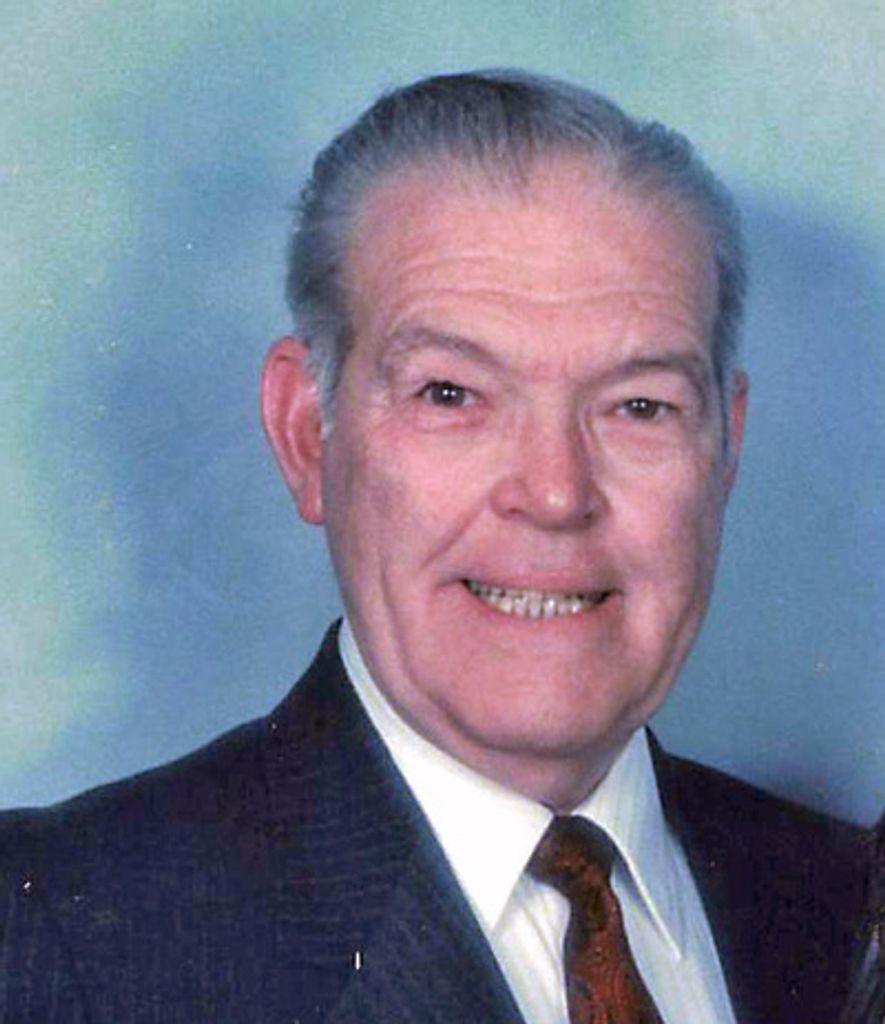
Whitmer
Jul 11, 1930 — Apr 26, 2020
Charles David Whitmer's Obituary
Charles David Whitmer, 89, of Richmond, died Sunday, April 26, 2020, at Kansas City Hospice House.
Charles was born on July 11, 1930, in Mount Vernon, the son of Elmer Shrewsbury and Virginia Ruth (Hartzell) Whitmer. He was united in marriage to Marjorie Lillard of Richmond on October 7, 1955; she preceded him in death on July 11, 2013.
Charles leaves behind: son, Brett David (Marla Lynn Losh) Whitmer of Kenmore, WA; two grandchildren, Cole David (Andrea Nicole Jackson) Whitmer and Kyle Jacob Whitmer; three great-grandchildren: Anya Kyle Whitmer, Lyla Clay Whitmer, and Cade David Whitmer; and brother, Alvin Owen (Gloria Jean Ross) Whitmer of Pleasant Valley.
He was preceded in death by his parents, wife, and son, Clay Douglas Whitmer.
The family suggests memorial contributions be made to Shriner's Hospital for Children. They can be left at or mailed to Thurman Funeral Home, 507 East Main Street-P.O. Box 190, Richmond, MO 64085.
Private family graveside services will be held on Saturday, May 2, 2020, in Richmond Memory Gardens. Ceremonies entrusted to Thurman Funeral Home, Richmond. Please remember to share your memories of Charles with the family by visiting www.thurmanfuneralhome.com .
Alvin Owen Whitmer (Charles's only brother): A Reflective Remembrance
The "Whitmer Brothers" Charles and Alvin were always together. We were born and raised in Richmond, Missouri in a small four-room house south of town. We slept together in a small rollaway bed.
We learned to do farm chores together. We learned to swim in ponds and to hunt. We lived a mile from town and there was no school bus so we had to walk to school with a lot of other kids.
On Tuesday nights the local show house cost a dime and our mother would pop a big bag of popcorn and with our friend Harold we walked to the show.
Because we lived close to town the town kids would come out and we would play hide and seek, tag and shoot marbles. We also played football.
Later on we moved north of town to much larger farm so we didn't have much time to play, but we did have time to go hunting with our friend Jimmy. We hunted rabbits, and squirrels and ducks every day.
After high school we both served in the military. After we both married, we started a house building business in Pleasant Valley. Charles got transferred to other places but we stayed in touch. After we retired I helped him build 2 houses - one in Richmond and then Olathe.
We stayed close, had lunch frequently. He was a good brother and I will miss not seeing and talking with him.
Alvin
Brett David Whitmer (Charles's oldest son): A Reflective Remembrance
Charles David Whitmer, my father, lived an incredible life and as it came to pass he endured to the end to live his life possessing faith in a continuation of it. Maturing over years, I myself am a grandfather, father, and been a long-term husband I can see that my father was not selfish nor self-centered; he was others-centered. He took outstanding, exceptional care of his family, far, far-exceeding expectations, setting a standard by which to strive to emulate. My father cared more for others than himself, and yet simultaneously, he managed to accomplish monumentally more than the others he cared for combined. He possessed a gift of certainty throughout his life's walk and his talk was uplifting and inspirational. My father was a builder of both brick and men, a decisive leader; he was certainly an alpha-male, and a super-cool dude.
My mother called my father "Suggie". "Suggie can we …?" "Suggie can you …?" The honey-do list, the cards, the letters she addressed to "Suggie", her husband, my father. The very first time I stepped into the last house my father built to retire in at Olathe, Kansas, my mother told me, in tears, how thankful she was for my father and that his love for her she felt. She intended to impress the moment and significance of what the two of them had entirely together between them and she accomplished her mission. It was a summation moment set solid completely about my father caring for and loving of her.
My brother, Clay Douglas, could write extraordinarily well and possessed a command of the English language greater than mine will ever be. I am confident in writing that Clay loved, honored and respected my father. My father used Clay as his legal advisor and attorney. Clay, a licensed attorney, took care of all my father's legal documents by personally writing and overseeing that my parent's wishes were legal, binding, and baby-bear-just-right for them. In equal confidence, as he did with me, my father spent an equal amount of one-on-one time with my brother teaching by example and demonstration. The two of them had a unique relationship simply because my brother, as all of us are now, was a unique individual. United States history and the law of the land were passions that my father and Clay shared together I am sure. My father relied upon Clay's expertise with the law, record and legal document research, witness interview information and fact extraction, writing mastery, and together the two of them by example and demonstration to the rest of us executed "Whitmer" values and style when my father made his selfless; however, agonizing decision to sell our Richmond, Missouri, family farm. It was the best decision for our family to make at that time. My father treated my brother and I as equal as he possibly could respecting I was aged older than Clay by two-and-a-half years.
My father aggressively sought to make the most of his time at work while away from his family to move up the corporate-ladder, so-to-speak. He was an overachiever throughout his professional corporate career at Sears, Roebuck and Company. He grew his career through business management becoming a credit extension specialist and industry leader. He created (he built the organizational structures and designed hard facilities, he rounded the pinnacle of being an authority) centralized uniform business decision making with respect to extension of credit to America as measured by his leading a credit extension industry collaboration team to write the logic, policy, and standards themselves. The 2020 credit scores people either love or hate are a result of the actions my father took to lead the writing thereof in the 1970s which was the beginning of credit extension industry collaboration. The logic for collaborative information share policy and standards uniformity enabled control of a great expansion of plastic card credit and debt. In the 1980s, American society was paper, yet my father told me of the things to come with respect to scoring people and being able to know who their 10 closest neighbors are, their credit scores too, etc. He initialized the creation of and authored algorithm data inputs and decision outputs. He possessed; in addition to his other collaborating credit extension industry leader team members, foresight that computing and internet capacities would enable the industry to execute logically, exploiting collaborative information share policy and standards uniformity written. He worked his way to the cutting edge within his chosen business management field of expertise representing Sears within the credit extension industry; thus, his influence was broad across dozens of large credit extension giants. My father retired an executive on his own terms mentoring the younger, less experience executives and the people who worked with him and for him liked, loved, and respected him there is no doubt about that!
My father once told me that his credit score was near perfect, over 800. I asked him how it could not be perfect and he explained it to me. After I graduated college and established by own credit score one of the first things I beamed to tell him was, "My credit score is near perfect, just under 850". He simply replied, "Keep it that way". I believe my father applied sound logic thinking the only means to measure and understand risk associated to extending credit when available from many competitors is for competitors to adhere to common information record sharing; thus enabling a credit score to be calculated. The rest is history. I think he used good judgment with respect to granting someone credit in America. He taught me fiscal responsibility.
My father enjoyed hunting, he taught me how to hunt, and I love to hunt and it is because of the fun I had with him. I got my skill, talent, love, and passion for hunting from my father and the times we spent together hunting are treasure to me. My dad had me in hunter safety when I was six-years-old (6) when we lived at Wheat Ridge, Colorado. He scored my final test and I answered 48 of the 50 questions correctly. I remember riding home in the car with him feeling that I had let him down with incorrect answers to 2 of the questions and I told him so; however, he then shared with me that being near the youngest in the class he was actually surprised at how well I had done. He said he was glad that I paid attention and that I had done better than the other six-year-olds had. He made me feel good and proud of what I had accomplished, that being I was a certified, card-carrying safe hunter. I was going to be a hunter like him!
My father's favorite bird to hunt was ducks. When we lived at Albuquerque, New Mexico on Saturdays during duck season, we would grab the decoys and our gear, jump in the jeep, head out to the wilderness, and find a good spot along the Rio Grande River to build a makeshift blind and set out the decoys. At first, I did not have a shotgun and had to stay seated hidden, quiet when we saw ducks, and do my best not to get frostbite. He taught me to not be afraid to go into the wilderness, what to do when you see ducks, what to do when you get ducks, the regulations, that a hunter is not always successful and is to always be ethical, e.g. you don't shoot a duck sitting on water or floating by on the river. That was so much fun! My favorite bird to hunt is pheasant because when we lived at Overland Park, Kansas my father took me out to Salina, Kansas and we experienced pheasants flying everywhere we walked and did a lot of shooting. On the ride back, I told my father that I liked hunting pheasants more than ducks and it did not bother him a bit, we were just both happy that we had birds and had a nice day together. Doves are another favorite bird that both my father and I share.
Big game hunting is an activity my father and I enjoyed doing greatly together and I actually preferred it best of all. It was surely a rival to ducks for my father. In New Mexico, we hunted mule deer, rocky mountain elk and pronghorn antelope. My father had taken me to Nara Visa, New Mexico when I was thirteen (13) years old and I harvested my first big game, a respectable antelope buck. My father harvested a nice deer one year in the Santa Fe National Forest. Once we were hunting the Carrizozo Lava Flow Field, in New Mexico, and my father could have easily have taken a big buck; however, he, being higher at the ridge of the bluff, saw me, saw the buck, he let the buck run in front of me so I could tag it. I did not make a knockdown shot and my father's friend tagged that big buck. My father gave up a big buck so that I could have a chance to get it. I told him that I would have rather him had tagged that buck. We were partners and he always took me with him whenever I could go and me the same with him. After I started living in Washington State, I took my father hunting rocky mountain elk with me for many years. One year we both harvested big cows and my father and I butchered, cut steaks and roast, ground burger and wrapped them for freezer storage in 32 hours, over 2 days, with help from my family. That was a lot of meat and work!
Hunting with my father as a young man enabled me to see him interact with his friends and them with him, sit around the campfire and hear tall tales told, learn and gain values that I otherwise would have not. Following the law, respecting private property, being safe, friendship, etc. are just a few of the things I learned from my father while we were hunting together. We began hunting with his friends and ended hunting with my friends. Over his life I realized a dream I told my father when I was a small boy riding home in the car when he had taken me hunting with him for the day. The dream was when I grow up I would take him hunting with me just like he took me with him. My father was my hunting partner. I remained a hunter, although my hunting partner could no longer go with me, he encouraged and advised me to do well. We shared my harvest whenever I came to visit him.
My father walked his talk when it came to doing his parenting part. He was active and led many parent groups throughout his son's lives, e.g. committee chairs. When it came time for an adult supervisor of young men chaperone to volunteer to go on a 100 mile, backpacking trip through the Sangre de Cristo Mountains of New Mexico my father was there to carry his weight. When it came time for a chaperone to volunteer to go on a high adventure 100-mile Minnesota Land of 10,000 Lakes wilderness canoe trip my father was there to paddle his weight.
Building was a passion of my father and I caught it from him. He introduced me to house construction when he and I built a large storage building at our house at Albuquerque, New Mexico. We poured a foundation, framed and raised walls and ceiling, installed windows and doors, bricked it and put the roof on with vents. We then ran electricity to it. It was quite the project and the sense of pride that I knew that I built that with my father stayed with me. Setting a goal, developing a plan, and then executing the plan are what he had demonstrated and made me part of. He taught me to mix and pour concrete, mix mortar, lay brick, wire electricity, solder copper pipe, run gas line, cut pipe threads using tap-and-die, measure and cut a board accurately, and to hammer a 16-penny nail in two strokes, set and sink! My father taught me how to do so many different things and he took the patience to pass onto me a few of the seemingly boundless skills, talents, and know-how-to(s) he possessed. Seriously, the recently contemporary phrase, "Git-er done", was lived, inspired, and defined by my father and men like him.
We were living at Overland Park, Kansas, I was sixteen (16), and my father maneuvered me into an opportunity to work the summer as a carpenter's laborer. I worked as a laborer framing the house he designed and built for our family to live in at Overland Park. I continued working through that summer with a crew of men maturing me because my father watched over me, took care of me, and made sure I learned and experienced good things that would help and stay with me throughout the rest of my life.
When we lived at Des Moines, Iowa, my father built one of the first houses at Johnston, Iowa. He took me upland bird hunting on the high, grassy plain plateau prior to building the house there. I was at the age of distraction, my priorities were not his priorities at that time, and I only helped him finish that house. When he lived at Flint, Michigan, one fall I helped him build sets of cabinets, drawers and doors and he taught me how to use a shaper and assemble the detail parts of cabinets, drawers and doors in order to make them. Those sets of cabinets built at Flint fit like a perfect hand-inside-a-glove into the house my mother was living in at the time at Kansas City, Missouri. Simply amazing to me, however, although I was not there for the installation, I imagine he only had to use a sliver of a gap cover board.
After his retirement from Sears, my father had the family farm at Richmond, Missouri sculpted, terraced, ponded, and he built a big house on the north edge hill. He and I hung all the sheet rock in that house. We hung nothing but 16-foot sheets and after filled in holes largest to smallest, and you know you start with the ceilings and the walls follow. My father and I only had one 16-foot sheet break on us. During the weeks we hung sheet rock in that house every morning at 4 a.m. my father would take me to a black, windowless restaurant in downtown Richmond. The first time he took me there, he had the wisdom to tell me not to say a word, that this was the "workin' man's breakfast". We walked in, he and the men exchanged greetings, and he introduced me as his oldest son. It was a rough and tough group and it was important to my father that we were on time, never late, and we never were. There was a crusty, grizzly old man that everyone showed respect who was always the one to walk in last only minutes past the hour and my father and I used to get quite the chuckles from the things he said and talked. I watched, listened, and grew accustomed to the routine. After not too long, I fit in because my father watched out for me and taught me unwritten, "tribal knowledge" so-to-speak, how to adapt to different situations, and to treat others with respect and dignity. He inspired and instilled a work-hard ethic in me giving me exposure to such; in addition to, his own example and demonstration. Many people in Richmond knew my father and he knew many people; however, I did not know them and he and them always seemed to respect each other and get along.
My father was creative and inventive with his building designs as he built craftsman houses. The house he built at Richmond, Missouri has floor joist set solid like no other due to his cutting and using 16-inch pieces of 2 by 16 to locate and position each floor joist, compression-bearing locking all of them into place. His retirement house he built at Olathe has a 9-foot first floor. Once we were sitting in the family room, I was admiring the beautiful oak woodworking he personally did throughout the room (he did the finish work throughout the entire house), and I said to him that I know how you created the 9-foot ceiling using 8-foot plywood and explained my presumption to him. He confirmed I was correct. I trust that I inherited some of his creativity because often I recognize his unique ways and means. He taught me to see things, read signs, and how to do my best to figure out things on my own.
My father was a charitable man; however, he never talked about it unless asked and then he explained how it was the right thing to do. He was an active member of Shriners International to the end and he had the magazine and T-shirt to proof it! For over 50-years a member in good standing (he realized dues exemption) my father remained a certified, card-carrying Brother at the Lodge Richmond No. 57 of Ancient Free and Accepted Masons at Richmond, Missouri. He was and Freemason; however, he kept those things to himself along with all the here and there gifts, donations, and helping hands he gave. He never every talked about his charitable giving to me unless prompted to do so. I observed my father perform charitable acts and I did not have reason to discuss them with him because it was the right thing to do.
My father was tough as a nail, he experienced hard hits, and bends and he never broke. Born at the beginning of the Great Depression, he was nine-years-old (9) when World War II started, eleven (11) when the United States entered this war, and fifteen (15) when it ended. He was nineteen (19) when the Korean War started and twenty-three (23) and on an Air Force transport leaving for Korea when the signing of the cease-fire armistice ended it. He served in the United States Air Force earning the rank of sergeant during the Korean War era. After honorable discharge, he attended the University of Missouri at Columbia where he married my mother when he was twenty-five (25) and earned a Bachelor of Science in Business Administration degree when he was twenty-six (26). Noteworthy, and extraordinarily interestingly my mother was a year younger than my father was and she earned the identical degree from the University of Missouri four years before my father, when my father was twenty-two (22). When my father was twenty-nine (29), he and my mother lost their first child, a boy, due to premature birth complications. They did not name or bury that son. They considered him never born. We only spoke of this once as a family when my mother and father told my younger brother, Clay, and I that we had had an older brother that did not live. Thus, I am actually their second son, born to my father when he was thirty-two (32), we lived in a house my father built at Pleasant Valley, Missouri and my family always treated me as the first-born. When he was thirty-four (34) his third son, Clay, was born and we lived at Santa Fe, New Mexico. My father saw man walk on the moon when he was thirty-nine (39). My father was sixty-nine (69) when we lost Clay and he was eighty-three (83) when we lost my mother. My father knew loss he was not supposed to know. He lost two sons and had to bury one of them. My father dealt with problems and adversities throughout his life and he always knew what the right, the best, the correct course of action to take to address the problems and adversities. My father always had the correct answers and actions to take to the seemingly impossible to answer questions and seemingly impossible to address problems and adversities that life deals a man. I witnessed my father pull himself up by his own bootstraps, put one foot in front of the other, and soldier-on many times. My father is my Hero; he has moved on with his life, I have lost my Hero for the time being.
The day after his journey-on while making access for the garage door technician I had thought of a kind of tool that I needed to clean up a pickup-truck-oil-leak dried with grass, leaves and time creating a blob that would not sweep off the garage floor. I went to the basement thinking that my father would put something like that around this corner and sure enough exactly what I needed was there. I grabbed it, ran up the stairs in bounds of two-steps, and shouted out to the technician, "Hey look at this tool my dad made!" "Looks like it is good for something" the technician, replied. Using the tool, I thought about how my dad was a redneck, a survivor, resourceful, a solution finder, thrifty and that he did not do things half-assed. He made good tools.
I was looking at an empty electrical socket housing in the basement of his retirement house he built at Olathe and I turned and saw an empty electrical switch housing and I thought to myself how much I wanted my father and I to be continuing on together running that wire to that unfinished switch and socket. I thought about how he has left me things to finish and complete. When we would sit and talk in the family room of now my house at Olathe, I told him what I planned to add onto the house. I told him what I was going to build adding onto what he had built, describing my additions to him. He would ask me questions and I would tell him my answers. I will never be the man my father was. I only hope that I can possess some of his personality and character because it will only do me good. My father never steered me wrong and when I listen to and did what he told, instructed or advised me to do, I was always the better for it. He was cherished, loved and is and forever will be greatly missed by me.
My father and I shared a belief that there was absolutely nothing be done with respect to eternal life in that all have already possession of it. What be done here and now is to live the best life a man can given the hand he is dealt having faith and hope that he ends up on the good side and not the bad. My father never ever preached, he taught by example and demonstration. My father endured to the end to be one of the white hat good guys! My hope is to endure to the end, to be like him, and to see him again sometime in the future.
Brett
Charles David Whitmer's Guestbook


Visits: 0
This site is protected by reCAPTCHA and the
Google Privacy Policy and Terms of Service apply.
Service map data © OpenStreetMap contributors